
A thriving environment is foundational to the livelihoods of many communities, especially in rural, agricultural, coastal and pastoral areas. When soils, waterways and forests are decimated, communities cannot sufficiently grow food to eat and sell, access water or gather firewood. This scarcity results in increased natural-resource based conflict, food insecurity, limited livelihood options, irregular migration, and vulnerability among communities and children, which may be forced to flee.
For over 70 years, World Vision has been dedicated to enhancing the lives and well-being of children worldwide. As the impact of climate change is growing, we are integrating climate actions into our ongoing community development work, including those in the Child Sponsorship programme, to help tackle the climate crisis, and change the future not just for one child, a single family, but for their entire community.
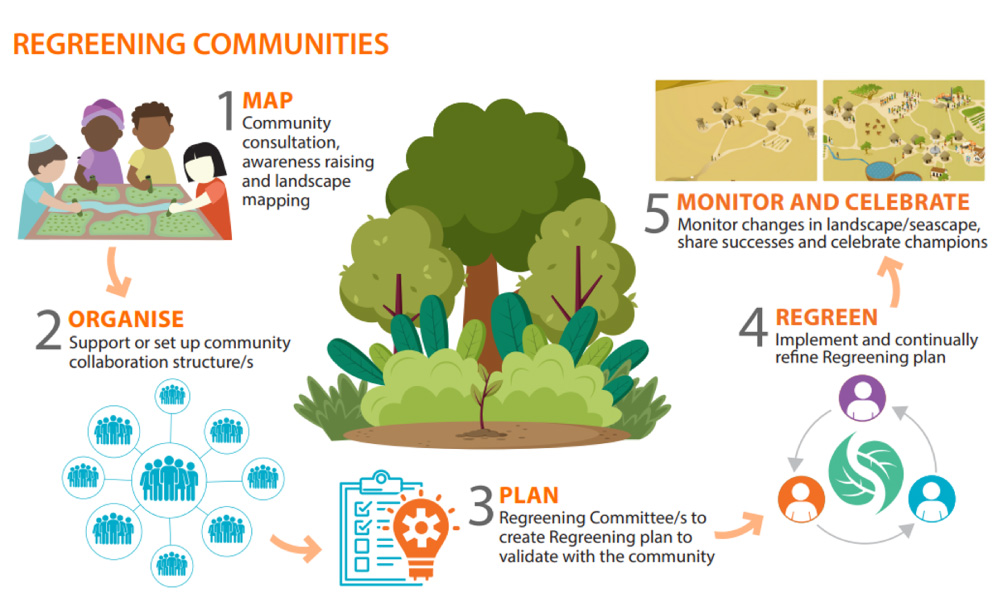
Regreening Communities addresses climate challenges through a participatory environmental restoration process with a tailored set of solutions precisely selected by each community. For instance, introducing pragmatic practices like Farmer Managed Natural Regeneration (FMNR). This participatory approach is holistic, and has been proven to be more effective in transforming beliefs, values, and attitudes, making it an essential part of achieving long-term and sustainable regreening outcomes.
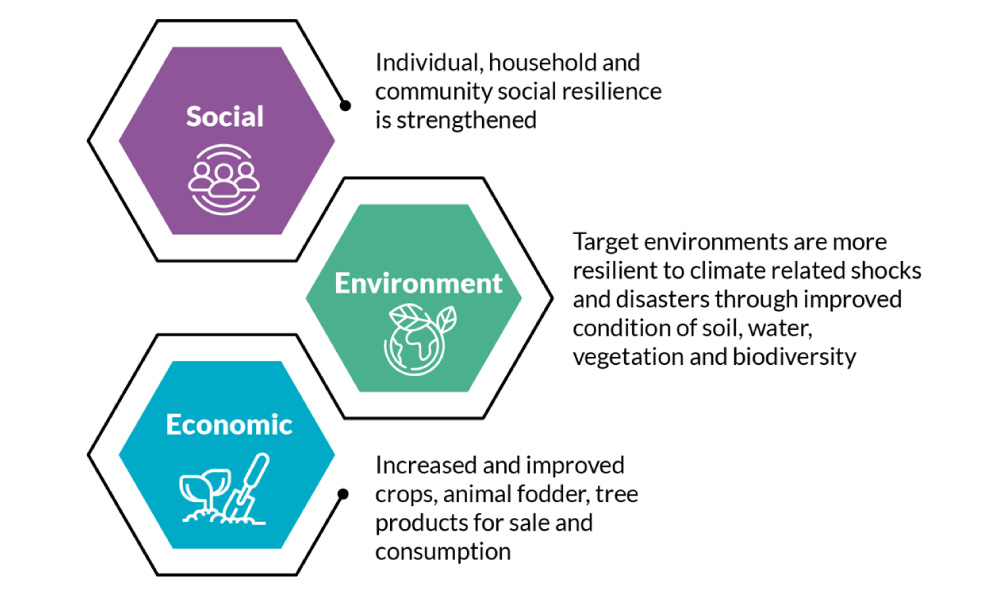
Through Regreening Communities, children and their families will have a more sustainable natural resource base that supports their access to the natural resources. This will improve food security, household income, resilience, and hope for many generations of children.
The outcome of Regreening Communities are:
The EU funded Regreening Africa is awarded the UN World Restoration Flagship. Click here to learn more.

Betalo is a 40-year-old farmer residing in Kokate Village, Ethiopia. When he was younger, Mount Damota has caused significant damage to the area, especially during the rainy season. Floods from the mountain eroded the farmland, taking away the fertile soil and depositing stones. As a result, many community members were forced to migrate to nearby cities and other areas in search of better living conditions. Over time, the farmland's productivity has steadily declined.
World Vision initiated a FMNR project on Mount Damota in response. This initiative focused on raising awareness about land restoration and its potential benefits for improving livelihoods. “Significant efforts were made to educate us and changed our attitudes. Additionally, World Vision also facilitated experience-sharing sessions with communities that practiced FMNR, and provided us with various training opportunities,” Betalo recalls.
The initiative prioritised mountain reforestation and offered a comprehensive support package to help households reliant on these mountains for their livelihoods. This included opportunities for income-generating activities, such as raising improved calves and heifers, enhancing poultry production, cultivating vegetables, and growing agroforestry seeds and seedlings, including apples and enset (commonly known as the ‘false bananas’).
After two decades, the once barren mountain has been restored, transforming a desolate area into lush, green fields that support both human life and diverse ecosystems. After the land restoration Betalo and his family, including his wife and four children, now enjoy a better quality of life. "I have enough food for my family and can send all my children to school," he shares.
Regreening Communities directly contributes to 13 of the SDGs including:

You may also email us at [email protected] or give us a call on (852) 2394 2394 to find out more about how you can help.


