
Climate change is a crisis for all, but the most vulnerable usually bear the brunt of it. As a child-focused agency, World Vision aims to address some of the most pressing climate threats by restoring the natural environment and working towards climate justice in order to create a thriving environment for children and the future generations to come.
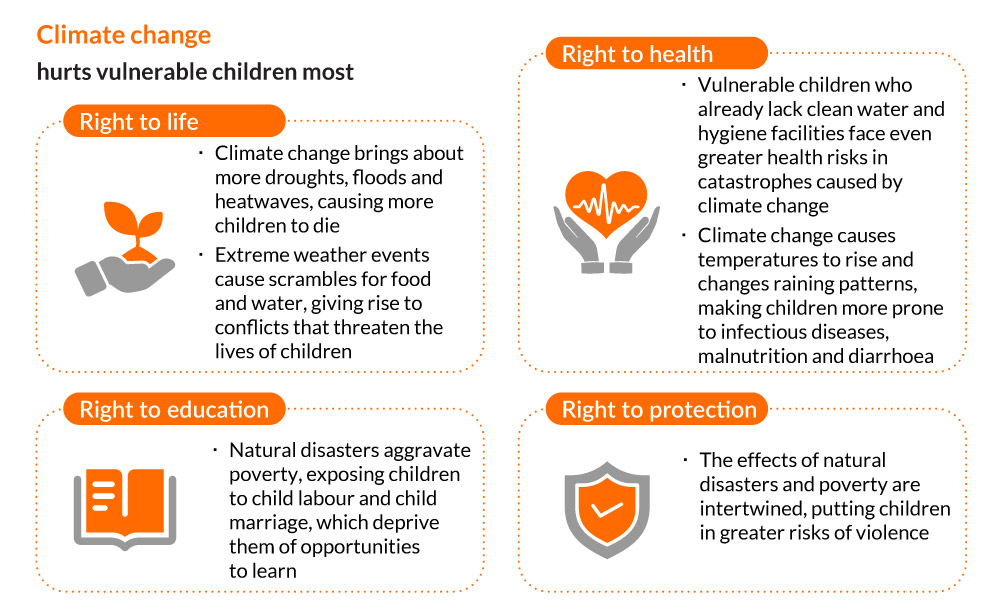
Climate change is not a distant threat but an urgent crisis actively impacting children worldwide. Approximately 1 billion children currently live in countries that are facing a high risk of climate and environmental hazards, such as heatwaves, water stress, floods, droughts, and other severe weather conditions. Moreover, more children are projected to face extreme climate hazards induced by severe weather in years to come. If we do not take immediate climate action, the future of these children will face immense risks.


We work on the following climate actions contributing to sustainable outcomes for children, to ensure they have hope and vision for the future.

FMNR is a community-led, nature-based solution that reverses environmental degradation and tackles poverty, hunger and climate change through the regeneration of trees and shrubs.

CSA offers enhanced food security, increased smallholder resilience and adaptation, and improved carbon sequestration by sustainably increasing the productivity of agricultural systems, increasing climate resilience and mitigating or reducing greenhouse gas emissions arising from agricultural systems.

Our work in NRM protects and restores land, vegetation and water to ensure sustainable improvements in agroecosystems to minimize climate-related shocks and disasters that place children’s wellbeing at risk.

IWRM is applied through the development and implementation of multiple-use water systems, which provide water for domestic uses, agriculture, livestock and livelihoods.

All members of society are engaged in climate action through education, training, awareness-raising, participation, public access to information and international cooperation on climate issues.

We partner with vulnerable children, families and communities to reduce vulnerabilities and increase their capacities to cope with, prevent or minimize loss and damage to life, property and the environment through risk reduction plans, strategies and policies.

Effective and sustainable waste management systems are key to maintaining adequate and hygienic living standards and for minimizing environmental and health impacts. Through our programmes, we help households incorporate environmentally friendly solutions for waste disposal and provide trainings to local authorities to ensure the implementation of existing policy and regulation for waste management and recycling systems.

Improving access to energy-efficient technologies such as fuel-efficient and environmentally friendly stoves can reduce indoor air pollution and exposure to woodsmoke, particularly for women and children, and at the same time reduce greenhouse gases.
In some of the most climate-affected areas, World Vision focus on delivering sustainable development outcomes for children, as well as their families and communities through our programme approaches that build resilience and improve climate change mitigation and adaptation. Our primary methodologies include "Regreening Communities" and "Farmer-Managed Natural Regeneration (FMNR)".
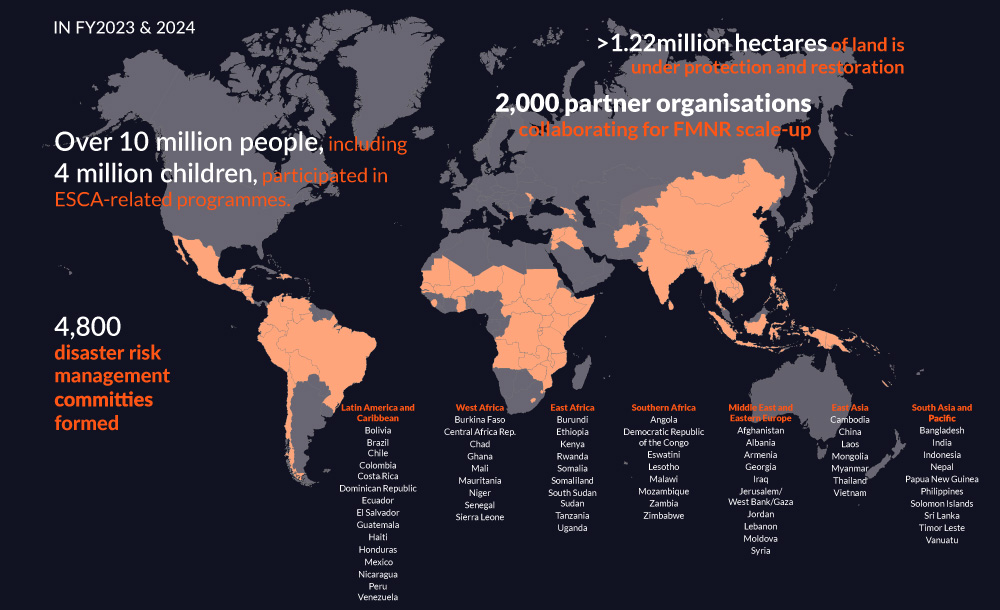
World Vision currently conducts Environmental Sustainability and Climate Action-related programmes in 69 countries across all regions. In FY2023–2024, over 10 million people, including 4 million children, participated in these programmes. We will continue to contribute actively to the global restoration goal to restore one billion hectares of degraded land by 2033.

EU funded Regreening Africa Awarded UN World Restoration Flagship!

Enhance Resilience to Climate Change Through Communal Efforts

Triple Threat

Environmental Sustainability and Climate Action


